A Pimple or Fistula on the Gum? Don’t Ignore This Sign of Dental Infection

Have you noticed a small bump, pimple, or opening on your gum that occasionally drains fluid or leaves a bad taste in your mouth?
It may not be painful. In fact, sometimes a tooth that was previously very painful begins to feel better once the bump appears.
That does not necessarily mean the infection has healed.
A pimple-like lesion on the gum may be a dental sinus tract, often called a gum fistula or gum boil. It can develop when an infection around the root of a tooth creates a pathway through the bone and gum so that fluid or pus can drain into the mouth.
At Dentin Family Dentistry in Vaughan, we recommend having any persistent or recurring gum bump examined, even when there is little or no pain.
What Is a Gum Fistula?
A dental fistula or sinus tract is a small drainage pathway that may develop when infection is present around a tooth or its supporting tissues.
When bacteria reach the pulp—the soft tissue containing nerves and blood vessels inside a tooth—the pulp may eventually become infected and necrotic. Infection can then spread through the root canal system into the tissues surrounding the root.
As pressure develops, the infection may create a pathway through the bone and soft tissue. The opening may appear on the gum as a small red, yellow, or white bump.
Because the infection is draining, pressure may decrease and the tooth can actually become less painful. This is one reason patients sometimes mistakenly believe the problem has resolved.
A draining sinus tract is a classic possible presentation of a tooth with pulp necrosis and a chronic apical abscess. (American Association of Endodontists)
What Causes a Fistula on the Gum?
Several dental problems can lead to a draining sinus tract. Common causes include:
- Deep untreated tooth decay
- Pulpal infection or tooth necrosis
- A previous root canal treatment that has become reinfected
- A cracked or fractured tooth
- Dental trauma
- Infection around the root of a tooth
- Advanced periodontal infection in some cases
- Problems associated with an existing crown or restoration
- In some situations, infection or inflammation around a dental implant
Determining which tooth is responsible is important because the opening in the gum is not always located directly beside the source of the infection.
For example, a sinus tract may drain several millimetres—or occasionally farther—from the infected root.
What Does a Dental Fistula Look or Feel Like?
A fistula can look different from one person to another.
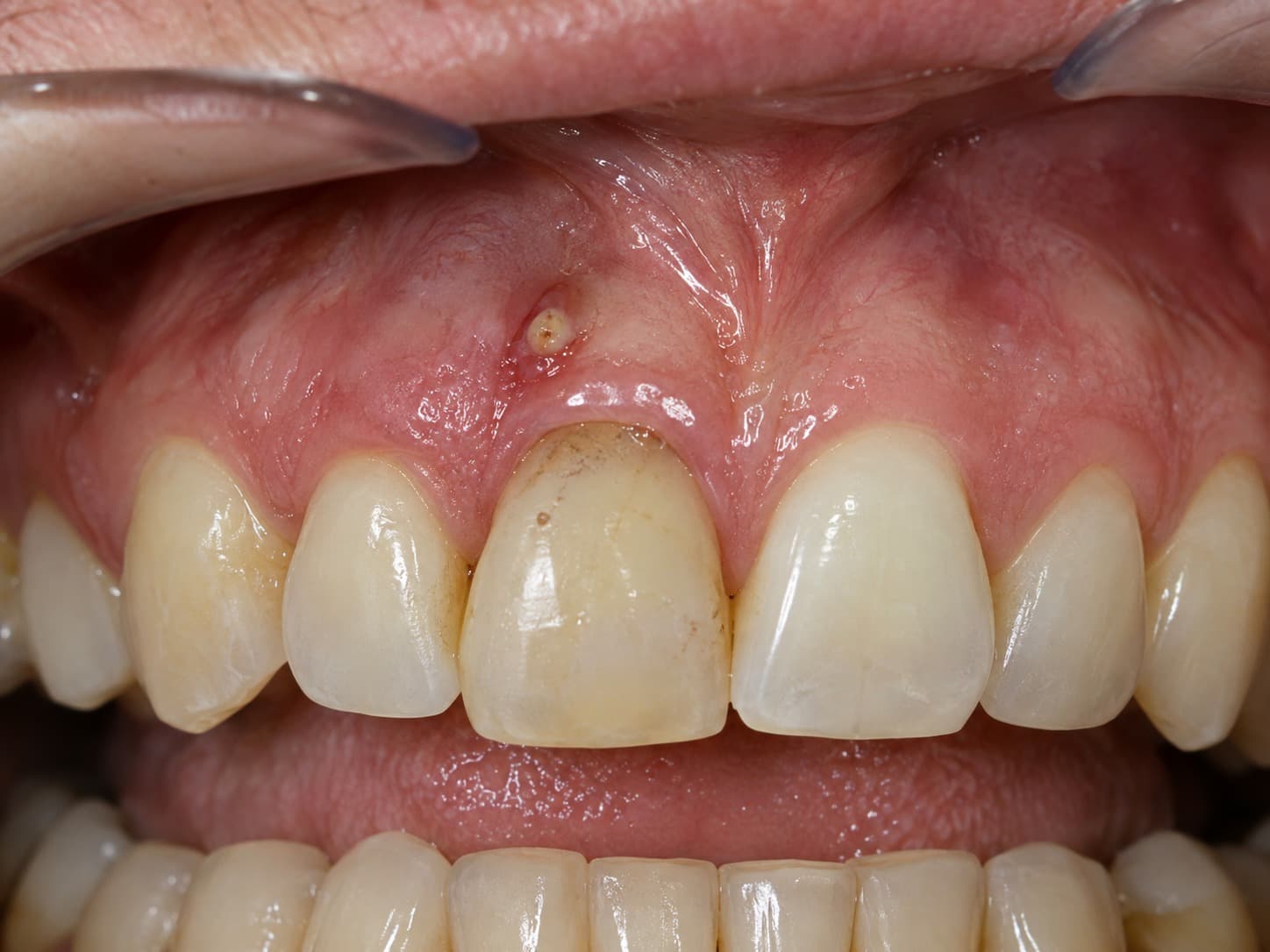
You may notice:
- A small pimple or bump on the gum
- A red or swollen area
- A tiny opening in the gingiva
- Intermittent drainage
- Pus or a salty/bad-tasting fluid
- An unpleasant taste that seems to come from one particular tooth
- Tenderness when chewing
- Tooth discoloration
- A previously painful tooth that suddenly feels better
- Swelling that disappears and later returns
Interestingly, some teeth with chronic draining infections produce very little pain.
The absence of pain therefore does not guarantee that the tooth is healthy.
Why Can the Tooth Stop Hurting?
This is one of the most confusing things for patients.
A tooth may initially become very painful as inflammation builds inside and around it. Once the pulp dies, the tooth may become less sensitive to temperature.
If a sinus tract subsequently forms, accumulated inflammatory fluid can drain through the opening rather than continuing to build pressure.
As a result, you may think:
“It doesn't hurt anymore, so it must be getting better.”
But the infection at the root can still be present.
In endodontic terminology, a necrotic tooth with a draining sinus tract may be diagnosed as a chronic apical abscess, depending on the complete clinical and radiographic findings. (American Association of Endodontists)
Can a Gum Fistula Go Away on Its Own?
The opening can sometimes shrink, close, and then come back.
That does not necessarily mean the underlying infection has disappeared.
If the source of the infection remains inside the tooth or around its root, the fistula may recur.
The goal of dental treatment is therefore not simply to make the bump disappear. The goal is to identify and eliminate the source of infection.
How Does a Dentist Diagnose the Problem?
At Dentin Family Dentistry, the evaluation may include:
- Clinical examination: We examine the tooth, surrounding gum tissue, restorations and the location of the drainage tract.
- Pulp vitality testing: Cold testing or other tests may help determine whether the nerve inside the tooth is still vital.
- Percussion and palpation: The dentist may assess whether the tooth or surrounding tissues are tender.
- Periodontal probing: This can help distinguish an endodontic infection from periodontal disease or conditions such as a root fracture.
- Dental X-rays: A periapical radiograph may reveal bone changes around the root.
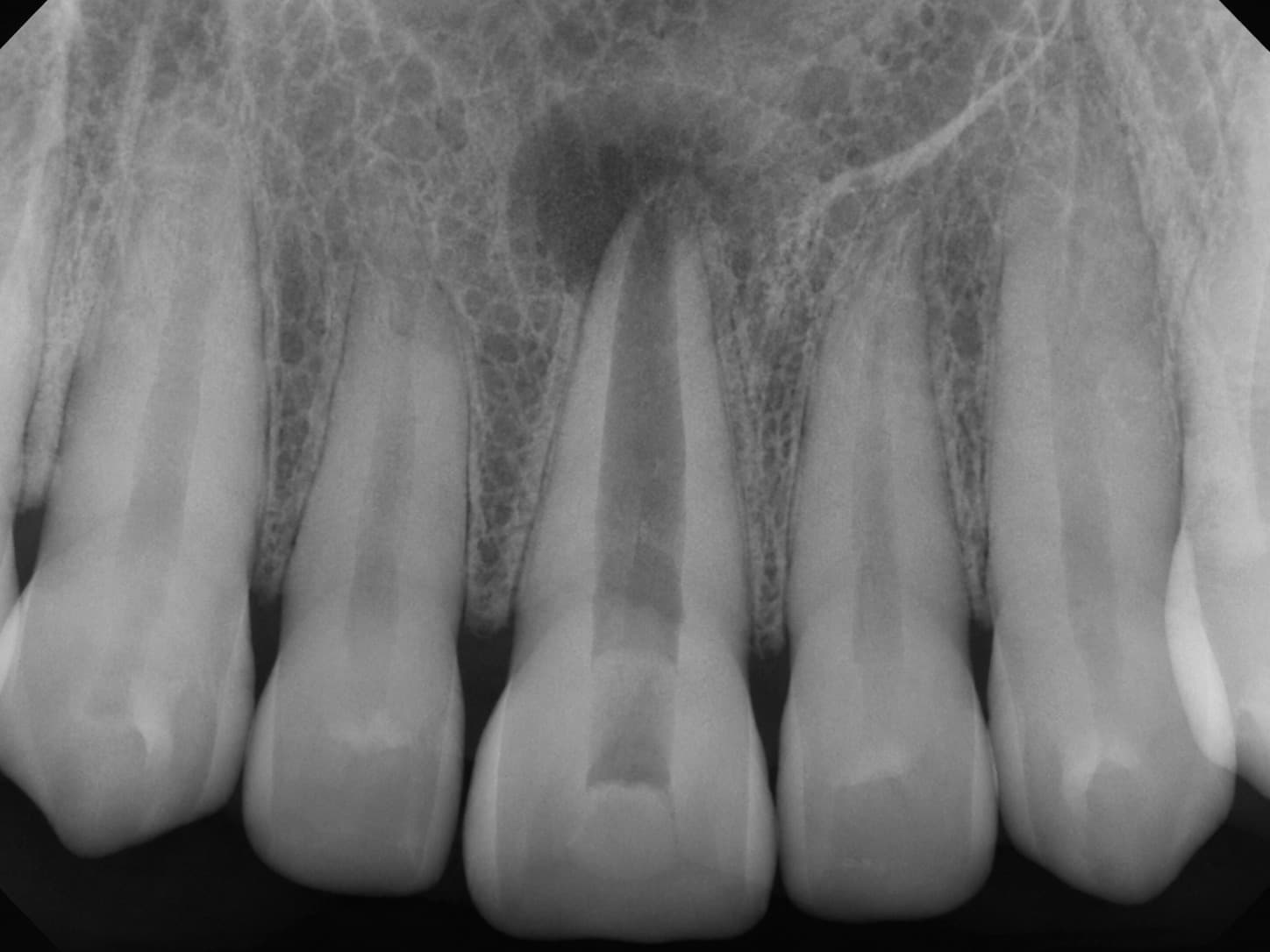
In selected cases, additional imaging such as CBCT may be recommended if conventional radiographs do not provide enough information.
Sometimes the dentist may also trace the sinus tract to help identify which tooth is responsible.
How Is a Dental Fistula Treated?
Treatment depends on why the fistula developed and whether the tooth can be saved.
Root Canal Treatment
If the tooth is restorable and the infection originates from a necrotic pulp, root canal treatment may allow the tooth to be preserved.
During root canal treatment, the infected tissue and bacteria are removed from inside the tooth, the canal system is disinfected and sealed, and the tooth is subsequently restored.
Once the source of infection is eliminated, the sinus tract will often heal without needing to be surgically removed.
Root Canal Retreatment
If the affected tooth has already received root canal treatment, the dentist will determine why infection has persisted or returned.
Possible causes include:
- untreated canal anatomy
- leakage around a restoration or crown
- recurrent decay
- inadequate previous root canal treatment
- fracture
- persistent infection
In suitable cases, root canal retreatment may allow the tooth to be saved.
Tooth Extraction
If the tooth is severely damaged, fractured, has inadequate remaining tooth structure, or has a poor prognosis, extraction may be the better option.
After healing, replacement options such as a dental implant, bridge, or removable prosthesis can be discussed when appropriate.
Do You Always Need Antibiotics?
No.
This is an important point.
For many localized pulpal and periapical dental infections in otherwise healthy patients, the priority is definitive dental treatment, such as root canal treatment, drainage, or extraction—not antibiotics alone. The ADA guideline recommends against routine antibiotics for most localized pulpal and periapical conditions when definitive dental treatment is available. (American Dental Association) Canadian antibiotic-stewardship guidance similarly advises against routinely prescribing antibiotics for toothache or a localized dental abscess. (Choosing Wisely Canada)
Antibiotics may become appropriate when there are signs that the infection is spreading or affecting the patient systemically, such as:
- fever
- malaise
- increasing facial swelling
- cellulitis
- significant lymph-node involvement
- rapidly progressing infection
- difficulty swallowing
- difficulty breathing
The need for antibiotics should therefore be determined after a clinical assessment.
Is a Dental Fistula an Emergency?
A small draining fistula without swelling or systemic symptoms may not require a hospital emergency visit, but it does require dental treatment and should not simply be watched indefinitely.
What About a Fistula Around a Dental Implant?
A draining area near an implant should also be examined.
The cause may be different from infection arising from a natural tooth and can include inflammation or infection involving the tissues surrounding the implant, residual infection from a neighbouring tooth, or another local problem.
Early diagnosis is particularly important because progressive inflammation around an implant can result in loss of supporting bone.
Should You Pop a Gum Fistula?
No.
Squeezing or puncturing the area does not remove the source of infection.
Even if pus drains and the swelling becomes smaller, bacteria may remain within the root canal system or surrounding tissues.
Avoid trying to treat the problem yourself with needles, repeated squeezing, leftover antibiotics, or home remedies.
Can a Dental Fistula Be Prevented?
Not every dental infection can be prevented, but you can substantially reduce your risk by:
- treating cavities before they become deep
- attending regular dental examinations
- obtaining radiographs when clinically indicated
- maintaining good brushing and interdental cleaning
- repairing leaking or fractured restorations
- having dental trauma evaluated promptly
- completing recommended root canal and restorative treatment
- returning for follow-up when a previously treated tooth develops new symptoms
Most importantly, don't ignore a recurring gum bump simply because it doesn't hurt.
Have a Gum Pimple, Bad Taste or Draining Tooth? We Can Help.
If you notice a pimple on your gum, drainage, an unusual bad taste, swelling, tooth discoloration or discomfort when chewing, it may be a sign of an infection that needs treatment.
At Dentin Family Dentistry in Vaughan, we can assess the source of the problem using a clinical examination and appropriate dental imaging and discuss whether the tooth can be saved with root canal treatment or whether another approach would provide a better long-term prognosis.
We welcome new patients and provide emergency dental care in Vaughan. Dentin Family Dentistry currently lists emergency services, endodontic treatment, restorative dentistry and oral surgery among its services. (Dentin Family Dentistry)
Book an appointment if you notice a recurring bump or drainage from your gum—especially if it is associated with a discoloured, previously root-canalled, broken or heavily restored tooth.
References
- [2] American Association of Endodontists. ENDODONTICS: Colleagues for Excellence. aae.org
- [3] American Association of Endodontists. Case Challenge (Part 1). aae.org
- [4] American Dental Association. Dental Infection Antibiotics Guidelines for Pain and Swelling. ada.org
- [5] Choosing Wisely Canada. Dental Toolkit. choosingwiselycanada.org
- [6] Dentin Family Dentistry. Contact Us | Dentin Family Dentistry Vaughan. dfdentistry.ca
Written by Dr. Mehdi Adibrad. Last reviewed: September 5, 2026.

Dr. Mehdi Adibrad
Head Dentist & Implant Dentist at Dentin Family Dentistry · Vaughan, Ontario
Dr. Mehdi Adibrad, DDS, MSc, is an Ontario-licensed general dentist and the head dentist at Dentin Family Dentistry in Vaughan, with more than 17 years of experience and active membership in the Royal College of Dental Surgeons of Ontario (RCDSO). Internationally trained in periodontics and implant dentistry, he holds a Master's degree in Periodontics and Implantology from Iran and is the Founder and Head Instructor at ConfiDentist. As an experienced implant dentist, he focuses on implant dentistry, periodontal care, and evidence-based general dentistry.
Read Dr. Adibrad's full profileThis article is for general education only and does not replace an in-person examination or the personalized instructions you receive from your dentist. If Dr. Adibrad's specific guidance differs from what you read here, always follow the instructions given to you directly. Individual results and treatment plans vary based on your oral health, bone levels, medical history, and a clinical assessment.