Dental Implant Procedure Step by Step: What to Expect
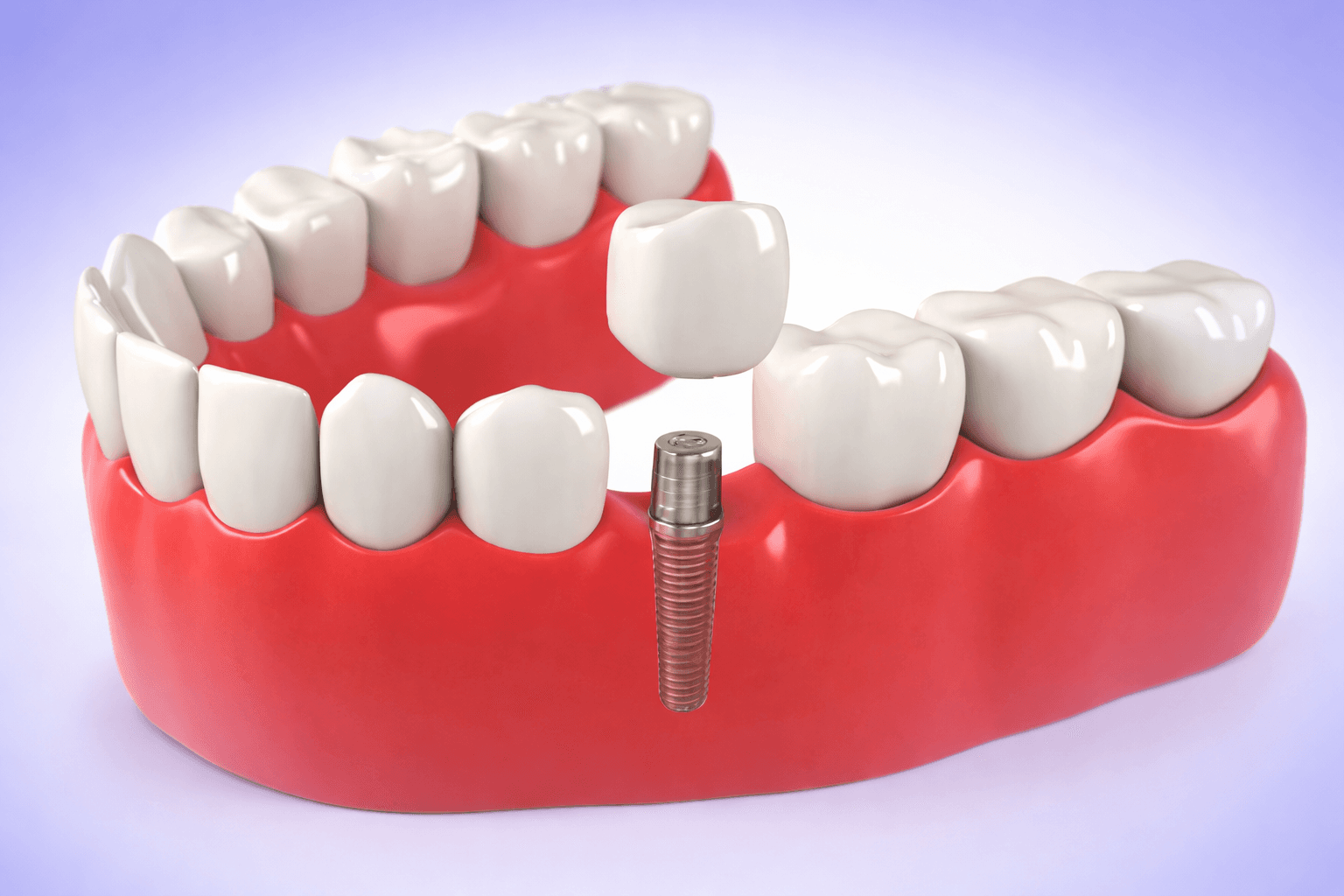
Implant treatment can sound complicated because the dental implant procedure step by step may involve several surgical, healing, and restorative stages spread over time. The good news is that each stage has a clear purpose. This guide walks through what commonly happens — from your first consultation to long-term maintenance — while being honest that not every patient follows exactly the same path.
Some stages may be combined, some may not be needed at all, and additional procedures are sometimes required. In selected cases an implant can be placed or even restored sooner than the traditional sequence suggests. The right plan always depends on the clinical findings for your mouth.
How Dental Implants Work
A dental implant replaces a missing tooth in two parts: a small post placed into the jawbone that acts as an artificial root, and a restoration — a crown, bridge, or denture — attached on top. Over time the bone heals around the post to hold it in place, a process called osseointegration.[1][3] Because that healing takes time, implant treatment usually unfolds in stages rather than a single visit.
Dental Implant Consultation
A dental implant consultation is a conversation as much as an examination. Your dentist will want to understand your concerns and goals, and review your dental and medical history, current medications and allergies, and habits such as smoking or vaping — all of which can affect healing and planning.[6]
They will examine your teeth, gums, bite, and the area of the missing tooth, and discuss both implants and appropriate alternatives. Giving a complete and accurate medical history matters, because it helps your dentist plan safely. A consultation is a starting point — it does not automatically mean an implant is the right choice for you.
Diagnostic Imaging and Clinical Assessment
To plan an implant, your dentist needs to see what is beneath the surface. Depending on the case, this may involve dental X-rays, a panoramic radiograph, three-dimensional (CBCT) imaging, intraoral scans or impressions, and photographs. Not every patient needs every type of imaging.
These records help assess gum and periodontal health, the height and width of available bone, and the position of nearby roots, nerves, blood vessels, and the sinus, as well as your bite and the space available for a restoration.[3]The specific tools used depend on your dentist's assessment of your case.
Personalized Treatment Planning
With the findings in hand, your dentist develops a plan tailored to you. That plan considers whether an implant is appropriate at all, the number and position of any implants, the timing of placement and loading, whether an extraction or bone or soft-tissue grafting is needed, the type of temporary and final restoration, the appointments involved, and the risks, alternatives, costs, and limitations.
This is also where informed consent comes in — a chance to ask questions before deciding. Reasonable alternatives are part of the conversation, and may include no treatment, a removable partial or complete denture, a tooth-supported bridge, a resin-bonded bridge in suitable cases, or another restorative approach. You can read a patient-friendly comparison in our guide to implants versus dentures and bridges.
Implants are an excellent option for many people, but they are not universally superior — the best choice depends on your priorities, health, and circumstances.
Treating Existing Oral Health Problems
Sometimes other issues are addressed before an implant is placed — for example active periodontal (gum) disease, tooth decay, dental infections, poor plaque control, or an unstable bite.[1] The aim is to place the implant into a healthy, stable environment. Timing and treatment requirements vary, and having an oral-health problem now does not necessarily rule out implant treatment later.
Tooth Extraction, If Required
If a damaged tooth is still in place, it may need to be removed. In some cases an implant can be placed at the same appointment as the extraction; in others, early, delayed, or conventional placement is more appropriate. Case selection depends on the anatomy, infection control, and the condition of the soft tissue and bone, and on achieving enough implant stability.[4]
It helps to know the terms clinicians use:
- Immediate placement: the implant is placed at the same visit as the extraction.
- Early placement: placement after a period of initial soft-tissue or partial bone healing.
- Delayed (conventional) placement: placement after the socket has healed more fully.
- Immediate restoration / loading: attaching a temporary or functional tooth soon after placement, in selected cases.
- Conventional loading: attaching the restoration after a healing period.
Importantly, immediate placement does not automatically mean an immediate final tooth.[4]
Bone Grafting or Site Development, If Required
Implants need adequate bone volume and quality for support, so when bone is lacking, a graft may be considered.[3] Approaches include socket or ridge preservation, guided bone regeneration, and — for some upper-jaw sites — sinus augmentation. Smaller grafts are sometimes done at the same time as implant placement, while larger ones are completed as a separate stage that adds healing time.
Grafting is not always required, and no procedure is guaranteed to succeed. Whether it is needed depends on your imaging and clinical findings.
Dental Implant Placement
On the day of surgery, the area is numbed with local anaesthesia, and sedation may be an option in appropriate cases. Your dentist accesses the implant site, prepares the bed in the bone, and places the implant, then fits a cover screw or a healing abutment and places sutures if needed. A temporary restoration is sometimes provided, and you will receive postoperative instructions.[2]
Local anaesthesia is intended to control pain during the procedure. You may still notice pressure or vibration, and the amount of discomfort afterward varies from person to person. The length of surgery depends on the number of implants and the complexity of the case, so there is no single “typical” duration that fits everyone.
Early Recovery After Implant Surgery
In the first days, some swelling, minor bleeding, bruising, and tenderness can occur, and a soft diet with gentle oral hygiene is usually recommended.[2] Activity is kept light at first, and follow-up care helps check healing. Worsening pain or swelling, persistent bleeding, or signs of infection should be assessed.
For a detailed guide, read Dentin Family Dentistry's dental implant post-operative instructions.
Osseointegration
Osseointegration is the process by which bone heals against the surface of the implant, gradually giving it the stability needed to support a restoration.[1][3] A key point often misunderstood: feeling comfortable is not the same as being fully integrated. Symptom recovery and bone healing are different milestones, and only your dentist can confirm the implant is ready to restore.
Healing time varies with bone characteristics, implant stability, the treatment location, any grafting, smoking, systemic health, and the loading protocol. A few months is a traditional general estimate, but contemporary protocols vary, and it should not be treated as a universal requirement.[3][4]
Abutment Placement, When Applicable
An abutment is the connecting piece between the implant and the restoration. Depending on the approach, it may be placed during the implant surgery, at a later appointment, or as part of the final restorative process. In a two-stage approach, a minor procedure exposes the implant and a healing abutment shapes the gum; in a one-stage approach this is done at placement. Not every patient needs a separate abutment surgery.
Digital Scan or Impression
Once the tissues are ready, your dentist captures the details needed to make your restoration using a digital scan or a traditional impression, along with bite records and shade selection. A temporary restoration may be worn while the final one is made in a dental laboratory. Both digital and conventional techniques can produce excellent results; the right choice depends on the case.
Placement of the Final Crown, Bridge, or Denture
The final restoration depends on how many teeth are being replaced — a single implant crown, an implant-supported bridge, or an implant-retained or implant-supported denture. Restorations may be screw-retained or cement-retained, and your dentist checks the fit, appearance, bite, and contacts, making adjustments as needed.
This phase can take more than one appointment to get right, and not every final restoration is a single crown. You can see the range of options on our dental implants page and in our restorative dentistry services.
Follow-Up and Long-Term Implant Maintenance
Treatment does not end when the final tooth is attached. Implants are maintained with regular dental examinations, professional cleaning at individualized intervals, daily plaque control, and careful cleaning around the restoration, while your dentist monitors the health of the surrounding gum and bone.[1]
An implant cannot develop a cavity, but the tissues around it can develop inflammatory (peri-implant) disease, and restorations can experience mechanical complications. Report any looseness, discomfort, bleeding, swelling, or change in your bite. The right cleaning tools depend on the design of your restoration, so ask your dental team what suits yours.
Dental Implant Timeline: A General Overview
| Treatment stage | What may happen | General timing | Why timing may change |
|---|---|---|---|
| Consultation & assessment | History, examination, imaging, and discussion of options | Usually one or more early appointments | Complexity of the case; whether records already exist |
| Preparatory treatment | Treating gum disease, decay, or other issues first | Varies | Extent of existing oral health problems |
| Extraction | Removing a failing tooth when present | Sometimes same visit as placement | Infection, bone and gum condition |
| Bone grafting / site development | Building or preserving bone when needed | May be same-day or a separate stage with added healing | Amount of bone needed; graft type |
| Implant placement | Surgically placing the implant | A focused surgical appointment | Number of implants; grafting; anatomy |
| Early recovery | Swelling, tenderness, soft diet, hygiene care | Days | Procedure extent; individual healing |
| Osseointegration | Bone heals around the implant | A general estimate of a few months; protocols vary | Bone quality, site, health, smoking, loading protocol |
| Abutment / soft-tissue stage | Connecting piece and gum shaping, when applicable | One short visit, when a separate stage is needed | One-stage vs. two-stage approach |
| Scan or impression | Digital scan or impression and bite records | One appointment | Restoration type |
| Final restoration | Fitting the crown, bridge, or denture | May take more than one visit | Fit, bite, and appearance checks |
| Maintenance | Ongoing cleaning and monitoring | Lifelong, at individualized intervals | Personal risk factors and restoration design |
This timeline is a general educational overview, not a treatment estimate. Some stages may be combined, omitted, or extended depending on the individual case.
Immediate and Same-Day Dental Implants
“Same-day” implants are often discussed, but a few different ideas hide behind that phrase, and they do not mean the same thing:[4]
- Immediate placement — placing the implant at the same visit as an extraction.
- Immediate restoration — attaching a temporary tooth that is kept out of heavy biting.
- Immediate loading — attaching a tooth that takes on functional bite forces early.
These approaches can be appropriate in carefully selected cases — for example when there is good primary implant stability and suitable bone, soft tissue, and bite conditions.[4] They can reduce the number of stages, but they are not right for everyone, and conventional, staged treatment is sometimes the safer choice. A same-day temporary tooth does not necessarily mean the permanent restoration is delivered that day. Whether an immediate approach suits you is a clinical decision made after assessment.
Is Dental Implant Surgery Painful?
Local anaesthesia is used during surgery to control pain, so you should not feel sharp pain while the implant is placed — though sensations such as pressure or vibration are common. Discomfort afterward varies with the complexity of the procedure and from person to person, and is usually manageable. Pain that is severe, persistent, or worsening rather than improving should be assessed. Any medication advice should come from your treating dentist based on your health and history.
Potential Risks and Complications
Dental implants are a well-established treatment, but like any procedure they carry some risk. Possible complications can include:[3]
- Infection at the implant site
- Delayed healing or implant failure and loss
- Nerve-related symptoms, such as altered sensation
- Sinus-related complications in relevant upper-jaw cases
- Injury to nearby teeth or structures
- Gum recession or aesthetic concerns
- Peri-implant (gum and bone) disease
- Mechanical complications with the restoration
- A need for additional treatment
Individual risk depends on the treatment site, the procedure, your health and habits, ongoing maintenance, and the complexity of the case. Your dentist can explain the risks that are most relevant to your situation.
Who May Be Evaluated for Dental Implants?
Suitability for implants is decided through an individualized assessment, not a checklist. Factors your dentist may weigh include:
- One or more missing teeth and your restorative goals
- Completed jaw growth
- Gum health and history of periodontal disease
- Bone anatomy and volume
- Oral hygiene and plaque control
- Smoking or vaping[6]
- Control of conditions such as diabetes, and relevant medications
- Any previous radiation treatment to the jaws
- Willingness to attend follow-up and maintenance appointments
Having one of these factors does not automatically rule you out; many can be managed as part of planning. The only way to know is a personalized evaluation.
Questions to Ask at Your Consultation
- What treatment options are appropriate for me, and what are the alternatives?
- Do I need additional imaging, an extraction, or a bone graft?
- When could the implant be placed, and would immediate placement or loading suit my case?
- What temporary tooth options are available while I heal?
- What are the main risks in my situation?
- How many appointments might be involved, and what is included in the estimate?
- What maintenance will I need afterward?
- Who will perform each stage of treatment, and what experience is relevant to my care?
Frequently Asked Questions
Considering Dental Implants in Vaughan?
If you are exploring implants, an individualized examination is the first step. The dental team at Dentin Family Dentistry (3300 Steeles Avenue West, Unit 6, Vaughan, Ontario) can assess your oral health, discuss appropriate tooth-replacement options, and explain the potential treatment stages for your situation. We welcome patients from Vaughan and neighbouring communities including Thornhill, Richmond Hill, and Woodbridge.
Request an Implant Consultation in Vaughan
Book a dental implant consultation in Vaughan with Dentin Family Dentistry to discuss your options and the treatment stages that would apply to your case.
References
- Canadian Dental Association. Dental Implants. cda-adc.ca
- Canadian Dental Association. Care After Minor Oral Surgery. cda-adc.ca
- Mayo Clinic. Dental implant surgery. mayoclinic.org
- International Team for Implantology (ITI). Consensus statements: implant placement and loading protocols. academy.iti.org
- Cochrane Library. Antibiotics at dental implant placement to prevent complications. cochranelibrary.com
- Health Canada. Smoking and tobacco. canada.ca
Written by Dr. Mehdi Adibrad. Last reviewed: August 22, 2026.

Dr. Mehdi Adibrad
Head Dentist & Implant Dentist at Dentin Family Dentistry · Vaughan, Ontario
Dr. Mehdi Adibrad, DDS, MSc, is an Ontario-licensed general dentist and the head dentist at Dentin Family Dentistry in Vaughan, with more than 17 years of experience and active membership in the Royal College of Dental Surgeons of Ontario (RCDSO). Internationally trained in periodontics and implant dentistry, he holds a Master's degree in Periodontics and Implantology from Iran and is the Founder and Head Instructor at ConfiDentist. As an experienced implant dentist, he focuses on implant dentistry, periodontal care, and evidence-based general dentistry.
Read Dr. Adibrad's full profileThis article is for general education only and does not replace an in-person examination or the personalized instructions you receive from your dentist. If Dr. Adibrad's specific guidance differs from what you read here, always follow the instructions given to you directly. Individual results and treatment plans vary based on your oral health, bone levels, medical history, and a clinical assessment.